Thursday, July 12, 2012

Phonics Pathways Pic


Kiddo hard at work on the Phonics Pathways "train game." We're just getting started but so far it seems to be both productive and fun, and he's been asking to "Do blending! Do blending!"

For the record, that apple he's eating came from our backyard tree. Yay urban agriculture.

Friday, July 6, 2012

Slightly Off-Beat Book Recommendations for Voracious Young Readers

Hubert, Theodore, Edie and Jane,
circa the second book


If your kid liked the Melendy quartet or the All-of-a-Kind Family books...

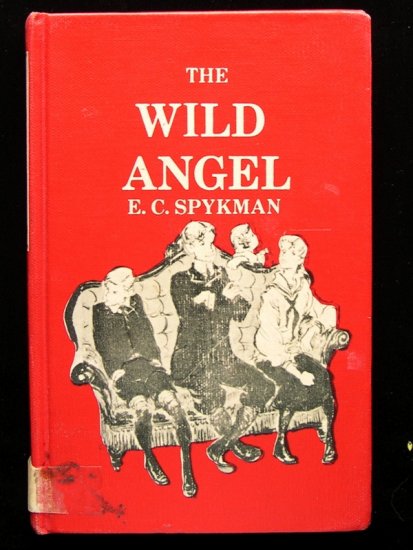
Try this quartet of books about childhood in small-town Massachusetts in the 1910s: A Lemon and a Star (1955), The Wild Angel (1957), Terrible Horrible Edie (1960), and Edie on the Warpath (1966), by E.C. Spykman. Spykman is an outstanding writer, and the four children of her story--Theodore, Jane, Hubert and Edie Cares--seem to live in the kind of barely supervised idyll that invariably leads to the most vivid and exciting experiences of childhood. Spykman was born Elizabeth Choate, and her family was Boston Brahmin from way back. This extremely comfortable lifestyle reveals itself clearly through the lives of the children of her book, even though they themselves don't seem to recognize their own privilege--they have a rambling farm to explore (complete with their own ponies!), and their farm is surrounded on all sides by other rambling farms owned by other family members, and their every need is met by a small team of servants: the housekeeper, the cook and the nurse. The father is distant but Kind and Important, the mother is dead, and the children have all they could ever want from the world in terms of pets, books, food and "free-range adventures." The series devolves a tiny bit as the last two books focus on Edie, who is determined to become and stay a spoiled brat at any cost, but Spykman gets points for honestly and unapologetically portraying the authentic and passionate self-involvement of 10-year-old girls. The youthful adventures in these books are good ones, and the language of the author, and the psychology of the characters are excellent.
Note: These books are out of print and possibly expensive, but they were quite popular in their day, so they should be widely available in larger libraries.

* * *

If your kid liked My Family and Other Animals by Gerald Durrell...

Try Dune Boy: The Early Years of a Naturalist by Edwin Way Teale (1943). Although this Indiana-set memoir lacks the exoticism of Durrell's pre-war Corfu, the two future naturalists had many of the same childhood experiences. Both went on long unsupervised walkabouts through the countryside, collected nature specimens from hither and yon without running into restrictions or suspicions from adults, and both have clear memories of how they began to learn to identify and understand the natural world around them. Teale spent summers and holidays with his grandparents in the Dune Country of Indiana, and his adventures here are split between the strange wildlife of the dunes, the woods and marsh immediately adjacent to his grandparents' farm and the nooks and crannies of the farm himself. He also describes a long-lost pre-petroleum world where root beer was actually made from roots, wintergreen was a plant and not just a flavoring, farmers raced to meet the late train with their strawberry crop for the big cities, and where township grandees purchased "140 volumes of the world's classic books" bound in leather to be shared by any local resident an interest in learning. Full of warm memories as well as big adventures like building a flying machine and trapping a seven-foot blacksnake, this is great reading for any boy's boy or anyone who enjoys rural Americana.

* * * 

If your kid liked the Little House books by Laura Ingalls Wilder...

Try Little Heathens: Hard Times and High Spirits on an Iowa Farm During the Great Depression by Mildred Armstrong Kalish (2007). My personal favorite parts of the Little House series were the old-time how-tos, stuff like how they made straw hats and what it meant to them when Ma got a sewing machine and so forth. Mildred Kalish's fabulous memoir of rural life in the 1930s contains delights like these and many more--recipes for applesauce cake, home cures that called for spider webs and egg membranes, and a whole chapter on the delights of laundry day. Mildred, her sister and her mom moved in with her "19th century" grandparents after their father dropped out of the picture, and they never looked back. Why would they? At the farm they got to sleep with tame raccoons, hunt down bumblebee nests and eat fresh food right out of the ground with nothing for garnish but a splash of well water and a sprinkle of salt from the salt lick. This is truly one of my favorite books ever, and while there's something for everyone in this book, if you have an appreciation for the good, slow life, look no farther than the Urmy farm near Garrison, Iowa. Wonderful stuff, recommended for absolutely everything.

Fair warning: This was not written as a children's book, although I strongly believe it could easily be read by anyone at a fourth-grade reading level or above. That said, cautious parents may want to know that the author discusses some topics which may or may not be appropriate for their children's reading, notably: There are at least two gruesome animal deaths (which are true to farm life but may be difficult for sensitive kids to hear about); there is a very very oblique reference to a neighbor's self-induced abortion--I was on my third re-read before I put it together, and I'm an adult, so I assume that most young people wouldn't have the slightest idea what was being referenced, but still; and lastly, the author is frank about her doubts about religion and God at a couple of points in the book, which may or may not lead to discussions or doubts on the part of your kid. But seriously, blow all that off and read the book. It is heavenly, I swear!

Tuesday, July 3, 2012

Cookie Monster's Famous Cookie Dough

Don't ever say we don't do nothin' fun around here. :)

Tonight at the library book shop (had to go in on a Tuesday on account of the holiday falling on storytime Wednesdays!), I found a copy of Big Bird's Busy Book, which is a Sesame Street activity book from 1975. It's full of fabulous activities that teach the alphabet, shapes, nature, colors, people in your neighborhood, feelings, numbers, body parts and opposites, and this copy is in great condition. (Hat tip to Wendy Kliener, apparent previous owner, for her excellent coloring skills and penmanship and her apparent lack of interest in the overwhelming majority of pages in this volume!)

Anyway, wanted to share Cookie Monster's Famous Cookie Dough with you all. Cookie recommends that you moms and kids out there cut the dough into strips for to be making letters and numbers from!


Friday, June 29, 2012

Used Book Report: Savers & Goodwill

After a crazy morning yesterday, the universe decided to offer some balm in the form of used book blessings.  I learned the phrase "fisher of books" from the Collecting Children's Books blog (RIP) and I think some of these were very good catches!

Someone thought they were too old for their once carefully curated Calvin & Hobbes collection and donated it to Goodwill. I'll be happy to add this to our book stock for what I hope will be the inevitable C&H phase/obsession. (J's dad loved reading Calvin & Hobbes.)
Did you know there was a companion to The Golden Book of Fairy Tales? Me neither. Meet The Snow Queen and Other Tales, also by Ponsot & Segur. (For the record, I spent many hours of my childhood reading a version of The Snow Queen, illustrated by Susan Jeffers. I can still see many of the pages in my mind!)
I believe when I saw the Provensens' Aesop's Fables on the shelf at the Goodwill I actually shouted, "NO WAY! SHUT THE FRONT DOOR!" Or something exclamatory to that effect. I love Provensens. I love Golden Books. I love illustrated classics. I am veryveryvery hapy to have found this.
Here's just one example of the high-'60s illustration style. Check out the orange and pink and avocado color scheme on the fable of the crow and the pitcher. The layout of the book is one black-and-white full-page spread with two fables, and then a cartoon-like full-color spread on the next page that illustrates one of the previously described fables.
Apparently Norman Bridwell wrote more than Clifford the Big Red Dog...The Witch Next Door is simple and cute. Next is a Gail Gibbons non-fiction about the sun and light. I have mixed feelings about her output, but a few extra facts won't kill us. And Grandfather Twilight by Barbara Berger gets a lot of love on some message boards I follow.
Some Parents Magazine Press Read-Alouds written or illustrated by Quakenbush, Calemenson, Asch and Jerry Smath. 

Syd Hoff I Can Read books (love the Barkley cover!) and one easy reader about a tortoise and hare sorting out their friendship.
More Parents' Magazine Press, including How Fletcher Was Hatched by the Devlins, The Great Sea Monster, and Granny's Fish Story, all of which have been featured on the great Vintage Children's Books My Kid Loves blog.

Some latter-day Golden Books published or reprinted in the 1970s and 1980s: Whales , written by Jane Werner Watson (she is a Golden goddesss) and illustrated by Richard Amundsen, a Sesame Street science book for very little kids called The Whole Wide World: A Question and Answer Book, and a Patricia Scarry-Tibor Gergely collaboration called Animal Friends All Year Long. I also picked up a Little Golden Books compilation (not pictured) that I thought had some stuff that was new to us, but then I realized I had all the titles in another compilation. Oh well! (P.S. I will send cookies to anyone who can 'splain me the official relationship between Golden and "Merrigold Press." I find the reprint relationship between the two institutions intriguing and baffling.)
One lone Best in Children's Books, volume nine, hard-to-clean cover either dirty or slightly mildewy, but no smell. :)
Just for fun, from the Best in Children's Books above, a Kate Seredy illustration for "The Princess and the Pea."

Sunday, June 10, 2012

Used Book Report: $1-a-Book Store

I told myself I'd quit. But I just needed one more hit. I think I have to relisten to The Power of Habit or take methadone or something. Anyway, here are a bunch of yellow-tinted images of today's haul:

Seven volumes of Doubleday's Best in Children's Books, which is enough to make me quite giddy! 
Donald Crews, Helen Oxenbury, Byron Barton, Hans de Boer, whee!

A cute picture book from the Leo the Late Bloomer people, a Feodor Rojankovsky Golden Book reprint (I love you Feodor!), and a bizarre, quasi-Freudian '70s book about dreams that was translated from the German. I cannot resist out-there semi-psychedelic '60s and '70s children's books, even if they're always too weird to ever actually be given to the kid.
Four Little Golden books, include The Three Bears illustrated by Rojankovsky, and My Little Golden Word Book, illustrated by my guy Joe Kaufman.

Our first Virginia Haviland fairy tales collection! Appears to be everything I've heard and more. Must refrain from ordering others online...
But look at that list of illustrators! Duvosin, Weisgard, Ness, Cooney, Hyman, Adams, aaaah!

ABC's of Nature, which will serve as another nature study handbook (we already used it to look up "owl pellets"!); The Book of Goodnight Stories, which I almost cried over because I have an unlikely affection for Czech illustration and that's what this is; and Usborne's The Time Traveller Book of Long Ago. I kid you not, just a couple of months ago I was visualizing some of the images from the Rome & Romans volume included herein and thinking to myself, man, "I don't know how I'll ever find that book again, but it taught me everything I know about life in ancient Rome." And here it is, in the company of similar books on the Vikings, the middle ages and ancient Egypt. As it turns out these books are still in print, but I'm very happy to have found this beat-up old compilation!
More Parents' Magazine Press. I need more bookshelves. Don't tell my husband. (As if he doesn't know, LOL!)

PETER SPIER! PETER SPIER! Never less than magical, and this title is no exception.

Our Nature Shelf

I can never seem to take a good picture of this thing, so I'm posting a bad picture, and it'll just have to do until my photography skills improve!

Once upon a time this nook in our kitchen contained an ironing board. It stood empty the first few years we lived in the house, and then when we redid the kitchen, our contractor installed the glass shelves. We could never figure out what to put on the shelves--wine and liquor would have been the obvious choice, but those were all too tall. At some point, it accidentally became a nature-study display area, and finally this space has a purpose. Jackson demands that we pull down various objects and he gets to handle them and we talk about the various items.

This is getting featured today because the baby-food jar on the bottom shelf is a new addition: We found an owl pellet on our sidewalk, and nothing makes mama excited like digested and regurgitated fur and bones! Hee. Anyway, here's a quick walkthrough of what's what, with my personal favorites bolded:


Top shelf: Geode collected from a streambed on one of our last family trips to Indiana, pine cone, rock labelled ROCK.
Second shelf: Sea snail shell from a tide pool, various other shells from grandma's trip to Florida, multicolored macaw feathers collected at the bird sanctuary at the Veterans' Garden
Third shelf: Another pine cone, European paper wasp's nest, bunya bunya tree seed (falling apart), lizard skin (falling apart)
Fourth shelf: Various dead insect stuff (fig beetle, honey bee, some spider egg sacs), magnolia tree seed, mussel shell (falling part), maple tree seed, owl pellet in baby food jar.

Thursday, June 7, 2012

Reading Program Decision

For the record, after looking at Teach Your Child to Read in 100 Easy Lessons, The Ordinary Parents' Guide to Teaching Reading and Phonics Pathways via a couple of different library systems, I've decided to give Phonics Pathways a try as our first reading program, where and when such a program becomes appropriate.

EZ100 made my small brain hurt, largely because it uses orthographic notation on the theory that the kids will need to know it someday, so why not start when they're six. {?!!} Maybe I'm just scared of something I don't understand myself, but I thought that approach was thoroughly off-putting and scary.

OPGTR is better, but what I discovered is that it's called "ordinary parent's guide" because it assumes no knowledge or skill whatsoever on the part of the parent, and therefore scripts nearly every line and action in the teaching process! "Instructor: Now you are going to read this word on your own. I will use my finger as a guide to help you." I'm sure this is all very wise and wonderful, but I am stubborn rebellious snot, and I am simply unable to operate under this level of control. If Phonics Pathways fails miserably, I'll try OPGTR next, but I can't stand the thought of being so mechanical in my approach. That said, I will be keeping OPGTR out of the library for a while so I can take some notes. For example, in the lesson on the "ph" sound, the authors write, "There is a delightful poem that contains all sorts of ph words called "Eletelephony" by Laura Richards. You can find this poem on several Internet sites or in the book Favorite Poems Old and New by Helen Ferris, 1957." I love ideas like this, and the general information chapters at the front and back are interesting as well.

Anyway, Phonics Pathways seemed to strike a nice blend between well-structured, complete lessons and superperky enthusiasm for children and language, and since it didn't push any of my psychological buttons, LOL, it's on order from Amazon now.

Wish us luck!